Why Spring Light Reveals What Winter Left on Your Skin
Thursday, 17 September 2026
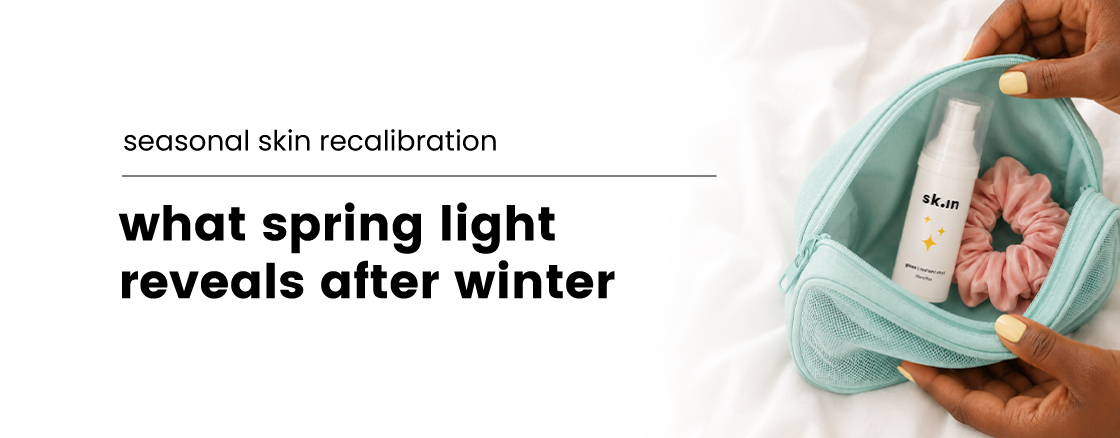
Spring light is higher in angle, cooler in colour temperature, and more directional than winter light, making surface texture, pigmentation, and dullness far more visible. Winter skin accumulates dead cell build-up, reduced circulation, and cumulative environmental stress. Spring simply provides the lighting conditions to reveal what was already there.
- Published in Seasonal Skincare, sk.in gloss
No Comments
Why sk.in bounce | combo shot Is the Structural Foundation of a Radiant Result
Tuesday, 01 September 2026
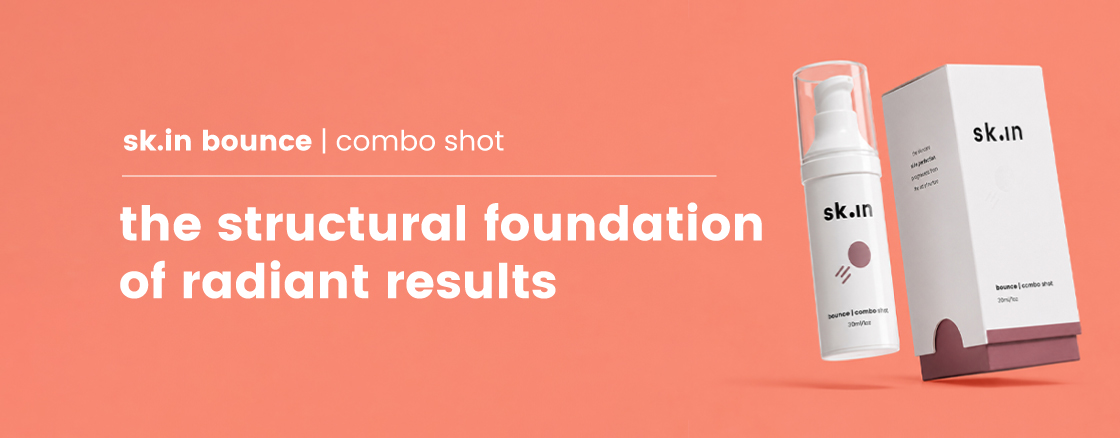
sk.in bounce | combo shot is formulated around HPR (Hydroxypinacolone Retinoate), a retinoid ester that supports cellular turnover with lower irritation potential than traditional retinol. In independent 8-week instrumental testing at Luamed (Slovenia, 2019), it helped reduce the appearance of pigmentation and supports skin elasticity, addressing the structural conditions that underpin a visibly radiant result.
- Published in sk.in bounce
Why Autumn Light Reveals What Your Skin Is Really Reflecting
Tuesday, 01 September 2026
Autumn light arrives at a lower angle than summer sun, casting raking illumination across the skin's surface rather than flooding it from above. This directional quality exposes texture, uneven tone, and pigmentation that flatter summer light conceals. The result is a clearer view of what your skin has actually accumulated over the warmer months.
- Published in Seasonal Skincare
The Glow Serum Explained: What Actually Makes Skin Look Radiant
Tuesday, 01 September 2026
A glow serum supports skin radiance by addressing the structural and surface conditions that determine how skin reflects light. Effective formulations combine hydration at multiple skin depths, surface renewal, and barrier integrity. Radiance is not a cosmetic effect applied on top of skin, it is an outcome of how well the skin beneath is functioning.
- Published in sk.in, sk.in gloss
Tapering Retinoid Frequency: The HPR Spring Protocol
Tuesday, 04 August 2026
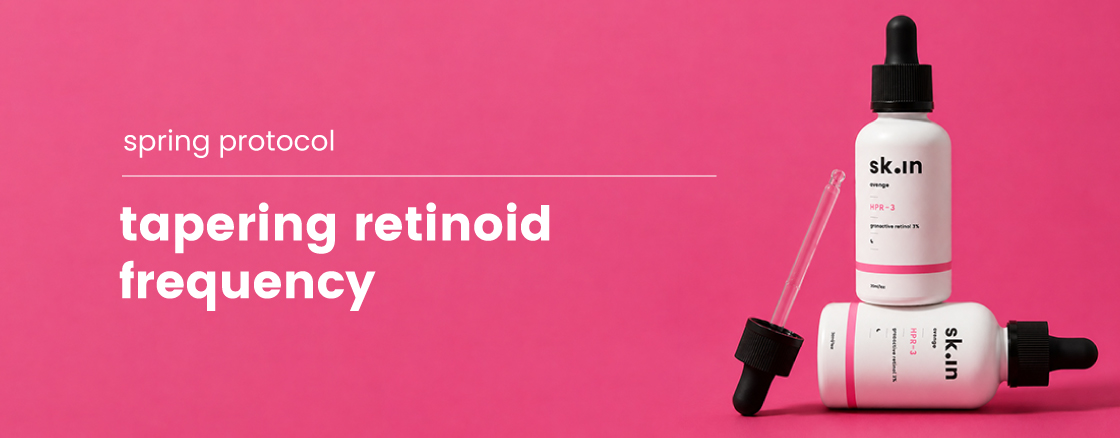
In spring, tapering retinoid frequency reduces the risk of UV-sensitised irritation while maintaining cellular turnover. Switching from nightly retinol to a once- or twice-weekly application of HPR (Hydroxypinacolone Retinoate) preserves efficacy, supports barrier integrity, and aligns with the skin's seasonal recalibration needs.
- Published in Retinol
Why Spring Is the Window to Build Antioxidant Habits
Tuesday, 04 August 2026
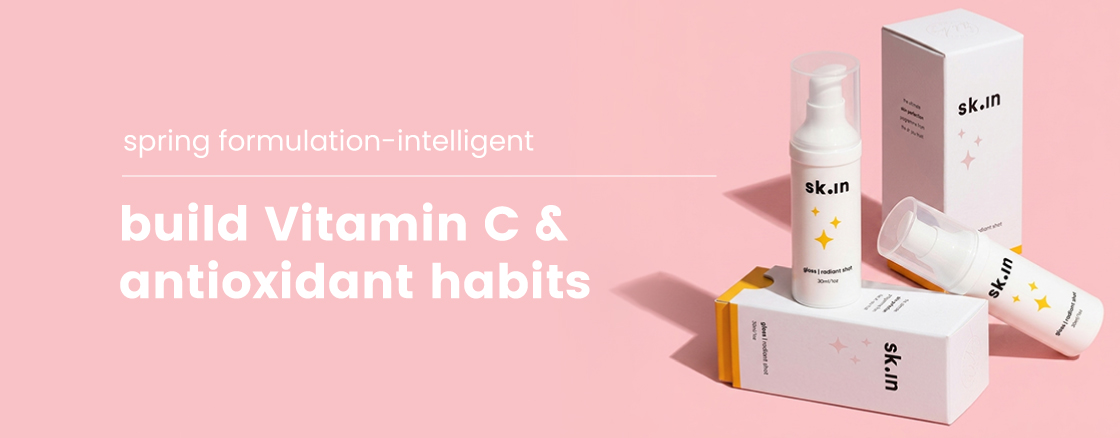
Spring is the optimal time to build antioxidant habits because UV intensity is rising but not yet at its summer peak, giving skin time to adapt to actives like vitamin C before cumulative environmental stress increases. Establishing a consistent antioxidant serum routine in spring means skin is better supported when summer conditions arrive.
- Published in Seasonal Skincare
The sk.in Guide to Your Spring Skincare Routine
Tuesday, 04 August 2026
A spring skincare routine has two layers: a daily foundation that runs every morning and evening, and a weekly treatment layer introduced once the daily foundation is settled. The daily layer anchors hydration and cellular turnover. The weekly layer introduces targeted actives. Neither layer should be introduced simultaneously.
- Published in Seasonal Skincare
Avoiding Ingredient Conflicts: What Not to Mix in Your Skincare Routine
Tuesday, 07 July 2026
Certain skincare ingredient combinations reduce efficacy, destabilise actives, or compromise barrier integrity. The most clinically significant conflicts involve acids with retinoids, vitamin C with niacinamide at high concentrations, and multiple exfoliating actives used simultaneously. Understanding these interactions is the foundation of layering intelligence.
- Published in sk.in ingredients, Skin Ingredients
Understanding Active Ingredient Concentrations in Skincare
Tuesday, 07 July 2026
Active ingredient concentrations determine how effectively a skincare product performs. A higher percentage does not always mean better results — efficacy depends on the active's threshold concentration, its pH environment, molecular weight, and ingredient compatibility. Precision dosing, not maximum strength, is the standard by which formulation quality should be judged.
- Published in sk.in ingredients, Skin Ingredients
How to Read a Skincare Ingredient List: Dr Alek Explains
Tuesday, 07 July 2026
A skincare ingredient list is written in INCI order, from highest to lowest concentration. Ingredients above 1% appear in descending order of volume; those at or below 1% may appear in any order. Reading this list tells you what actives are present, roughly how concentrated they are, and whether the formulation is likely to deliver on its claims.
- Published in sk.in ingredients, Skin Ingredients


